Wednesday, April 15, 2020

Top Three Heavy Hauling Tips


American Aerial Services serves our clients in the Falmouth and Portsmouth, ME areas in a variety of ways. Our crane rentals are an important part of what we do, but so too are steel erecting services, stairs, rails, and so much more. Our work generally does not take place in a vacuum; we’re often involved in major projects that involve commercial and industrial HVAC installations and other specialty equipment, much of which is enormous and requires specialized transport. Since we’re sticklers for proper planning, we’re providing this brief guide to help you better understand and plan around the heavy hauling process.

Understand Your Project

Heavy hauling isn’t usually just about heavy hauling. Whatever needs to get from point A to point B exists in context. Whether it’s a piece of earth moving equipment, structural steel, a modular office, or a backup generator, it’s not enough to know you need something; you need to know why you need it, where you need it, and when you need it. 

Here’s why that matters: beyond key specifications of the item being transported (its precise dimensions and weight, plus any special handling needs), space on any jobsite is limited. Having something collecting dust on site while you’re waiting for the right project phase for its installation can be costly; it’s better to schedule a just-in-time transport to ensure something is there only when it’s needed, it slots into place quickly and easily, and you’re working with your flow rather than against it.

Site & Existing Equipment Evaluation

During the planning phase, you should have gotten a thorough understanding of what you have as current equipment and what you’ll need to finish the project. It's an important part of the process to check for power lines and underground utilities at the site. You do not want unwanted costs to come into play or worse - delay the project all together. Always implementing a safety check to ensure your personnel can work on site is our biggest concern. This is done through a site footprint and part of the overall evaluation.  

Work With an Experienced Hauler & Crane Operator

Equipment and crane rentals are the perfect solution for a variety of jobs. We know from experience, that some things are best left to the experts. All of our rentals include transportation of the machinery, a certified operator and safety check. Just the same as we’re exceedingly careful about crane operation, we don’t suggest contracting with an inexperienced hauler (or, worse still, trying to jerry-rig a solution on your own). Experienced drivers, proper equipment, and the knowledge to plan and execute your project all matter, so choose your partners wisely. 

Wednesday, March 4, 2020

Why a Signal Person Matters to Crane Safety


A significant part of the work done by American Aerial Services isn’t obvious to the untrained observer. Crane rentals are easy to understand, and the benefits of our steel erecting services last long after our work is done. But when it comes to the details of our work, there’s a lot that you might’ve overlooked — even though we certainly don’t. Case in point: the crane signal person, or spotter, who’s a vital part of much of our work. Here’s what they do, how they’re certified, and why it matters to us and to you alike when you’re looking for local crane services in Portland ME.


When a Crane Signal Person is Needed

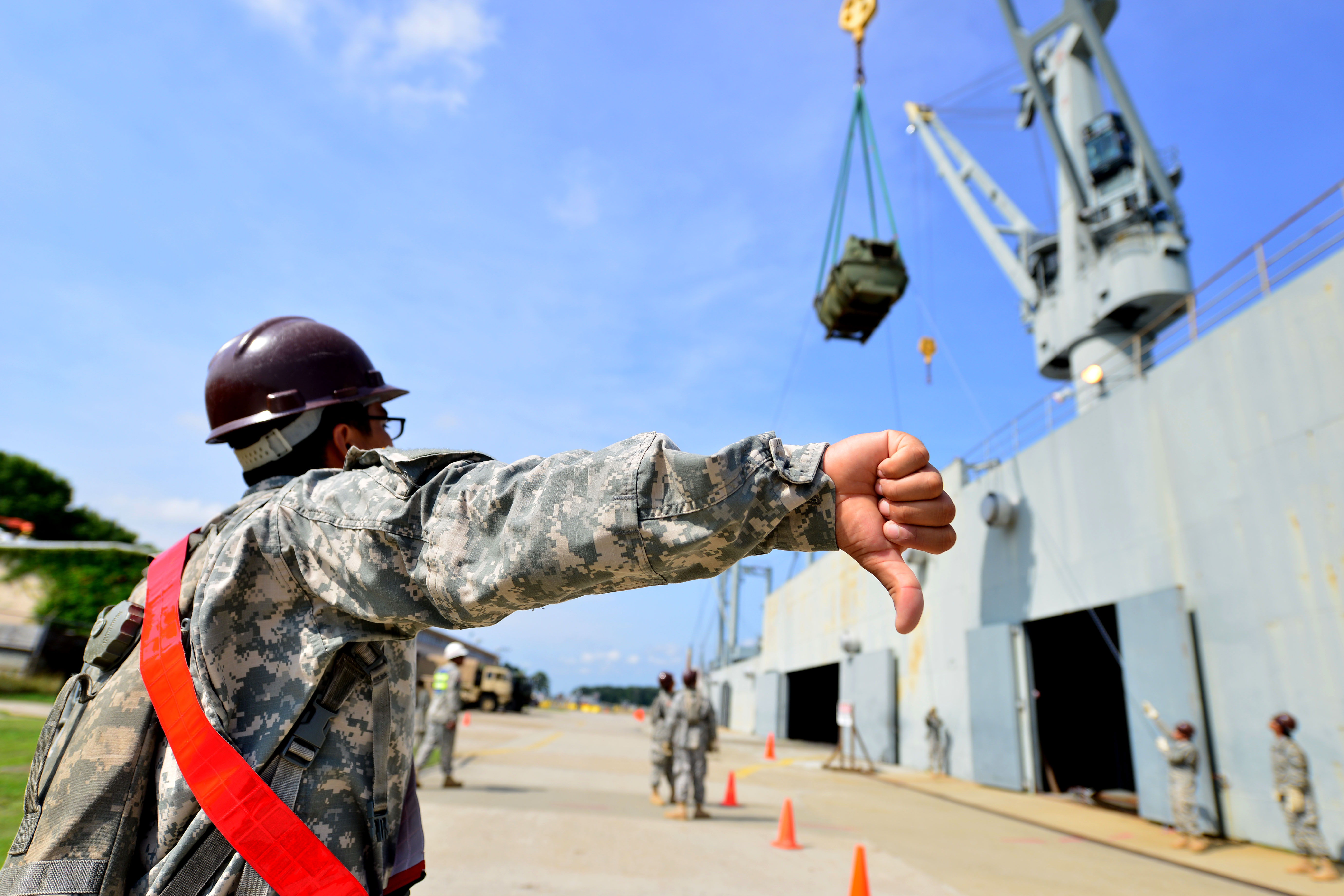
When they’re using a 90-ton crane to move and place a heavy load, a crane operator can’t afford to be distracted. Unfortunately, visibility on many job sites isn’t all it should be. When you’re working in a tight space, or when the crane operator’s job is just one of a dozen or more being performed on site that day, situational awareness is crucial. But what do you do when lines of sight are compromised, or when you’re trying to navigate all of those obstacles? That’s where the crane signal person comes in.


What a Crane Signal Person Needs to Know

Like much of the rest of our work, our crane signal person is governed by OSHA regulations, and must meet or exceed the qualifications laid out in Subpart CC (specifically 1926.1419 through 1926.1422, and 1926.1428). They must know the signals used on worksites, and be fluent in their use. 


A crane signal person needs to know more than signals. Since they’re often providing an extra set of eyes and ears in circumstances where a crane operator might otherwise be operating blind, their understanding of crane mechanics (crane swing, tail swing, raising, lowering, and stopping rates for loads), and the dynamics of the load itself, including boom deflection, are also needed. And they need to prove all of the above via written and practical tests. 


A number of signals — hand, voice, and audible — can be used. Every so often, situations come up that don’t conform to the usual signals; when that’s the case, the signal person, operator, and anyone else who needs to be alerted will agree on appropriate non-standard signals. 


Why it Matters

At the end of the day, we’re working toward the same goal that you are: a job that’s completed on time, on budget, and safely. Given the nature of our work and the loads we’re handling, there’s a very low margin of error, and having a crane signal person on site is for your safety as much as ours.


Working with American Aerial Services


We’ve had a lot to say about safety up to this point, but it’s not just words; we walk the talk. Our teams carry crane operator certifications from the American Institute of Steel Construction (AISC) and National Commission for the Certification of Crane Operators (NCCCO) in addition to OSHA. That’s required thousands of combined hours of training, written examinations, practicums, and refining our procedures and processes to ensure we’re always ready to give our best. So if you’re looking for the best local crane services in Portland ME, reach out to American Aerial Services. 

Wednesday, January 15, 2020

Our OSHA Certification: What’s in it For You?


Unlike renting a trailer or a skid loader, a crane rental isn’t a job for the inexperienced. Crane companies in Maine often handle heavy loads at dizzying heights; it requires extensive training and skill to prevent minor accidents or major catastrophe. Suffice to say, it’s not as easy as the crane operators of American Aerial Services make it look. If you’re a builder or contractor and you need crane rental you can trust, the many certifications we hold — from AISC, NCCCO, and especially OSHA — will put your mind at ease.

Why OSHA? 

OSHA, the Occupational Safety and Health Administration, was established by an act of Congress in 1970. It establishes rules, regulations, and certifications for training, equipment, construction standards, and much more. Nearly fifty years on, it reaches into nearly every American workplace, perhaps none as thoroughly as construction.

OSHA for Crane Operation 

A major update to 1926.1427, the section of OSHA code that governs crane operation, took effect in 2018. The amendment adjusts licensing requirements to account for either crane type or capacity. The rules are extensive, but the key requirements for certification include both written and practical evaluations. Once issued, the certification is valid for five years. Criteria include:

  • Demonstration of literacy relevant to the work, including the ability to understand written manuals and procedures 
  • Ability to calculate load capacity in various equipment configurations 
  • Proper equipment configuration and operation, including counterweight setup 
  • Technical knowledge of surface support, site access, and site hazards 
  • Risk evaluation and eversion 
  • The ability to perform key hoisting duties 
  • Operational and maneuvering skills 
  • Application of load chart information, safe shut down, and securing procedures 
  • Performance is to be audited periodically, with any deficiencies corrected and documented 


Other Certifications Held 

In addition to OSHA certification, American Aerial Services’ crane operators hold certifications from the National Commission for the Certification of Crane Operators (NCCCO) and American Institute of Steel Construction (AISC). This adds further layers of training on quality assurance and safety procedures, ethics, and more — indeed, everything from PPE lock outs, tag outs, and randomized drug testing. These are viewed as the industry standard, developed by those working in the industry and continually reevaluated to ensure they keep pace with the latest developments in equipment and safety.

How You Benefit

Up to now, all of these agencies, certifications, and acronyms probably seem arcane. If you’re asking, “What’s in it for me?”, here’s why it matters.

Compliance 

If your contractors and subcontractors don’t carry the proper certifications, the State of Maine and OSHA could bring the proceedings to a grinding halt. Since time is money (and both are tighter than you’d like, in any event), it’s best to have your papers in order.

Safety 

Workplace accidents are costly for all involved. Employers pay about $1 billion per week in workman’s comp costs alone; factor in other issues, like liability exposure or significant property damage caused by careless operation, and it’s clear why these certifications matter.

Cost Controls

Besides the direct cost of accidents and other mishaps, indirect costs can come from a variety of directions. Dealing with legal issues, implementing corrective measures, retraining employees, replacement of equipment, property, and other assets… it all adds up.

Our licensure is more than a selling point for American Aerial Services. It’s our promise to our employees that we’ll always do right by them, and our promise to our clients that you’ll always get our best. Questions? Get in touch today!

Tuesday, December 10, 2019

Weather Hazards and Construction Projects


It’s easy to envy animals that hibernate, snoozing through the worst of the ice, snow, wind, and freezing temperatures that come with Maine winters. But fewer animals hibernate than you think — they’re just more careful about when they come out, and what they do once they emerge. There’s a lesson there for those of us in the construction trades, since the work goes on whether or not Mother Nature’s in a mood to cooperate. Here’s what you should know about worker safety if you’re working with American Aerial Services for crane rental or steel erecting during winter construction projects.

Site Preparation

Preparing for construction projects in the winter moves on two tracks simultaneously. On one hand, it’s necessary to fill potholes and remove other surface hazards that can be hidden under the snow. On the other hand, snow and ice make slips and falls even more common than they are during the rest of the year, so keeping up with snow removal and ice remediation to improve traction is especially important.

Weather Monitoring

Any job we undertake involves extensive preparation, but there are added layers of preparation that take place during the winter. We’re typically looking at the weather several days out in addition to monitoring conditions day-to-day, or even hour-to-hour. Heavy snowfall and high winds can preclude work on-site, and can also change the timing when we clock out for the day, since getting our employees home safe and sound is also a high priority.

Proper PPE

Personal protective equipment (PPE) is even more important — and a bit more extensive — in the winter than at other times of year. In addition to grip and anti-slip properties, items like boots and gloves need to insulate against colder temperatures, water, and the possibility of frostbite, and hard hats should have an insulated lining for warmth. Reflective vests are helpful, since the lower light and shorter days can make for poor visibility. And in order to prevent decreased vision, face masks, goggles, and safety glasses should be treated with an anti-fog coating.

Other Safety Aids 

Emergencies can come up at any time of year, but wintertime comes with its own set of challenges. Your worksite and work vehicles should have a number of emergency kits in stock, with each including essentials like shovels, scrapers, first aid, flashlights, tow equipment, and jumper cables. We also suggest having additional hats and gloves on hand, since they can wear out or go missing unexpectedly.

Proper Employee Care 

Caring for your employees and ensuring their safety goes beyond a well-stocked first aid kit and good PPE. It’s also furnishing break spaces that are warm and dry, ensuring that everyone’s well-fed and hydrated, and also keeping a close eye on coffee consumption. While it helps with alertness and a feeling of warmth, it can raise blood pressure and won’t protect against low temperatures.

Working With American Aerial Services 

American Aerial Services calls Maine home. We know what winter looks like around Portland and Falmouth, and the additional hazards it brings. But we also have the experience and diligence to make it work — we take safety seriously year round, and we undertake the additional planning to mitigate those hazards. We’ll help you maintain productivity without sacrificing safety, no matter what time of year or what the weather brings. Get in touch today!

Monday, September 16, 2019

Safe Cable Railing Installations


Cable railing used to be something found mainly in warehouses and out-of-the-way areas in commercial and industrial buildings. In recent years, however, more projects than before involve steel cable railings. If you’re located in the Portsmouth, NH or Portland, ME areas and you’re considering a cable railing for your next project, or the plans are already drawn up and you need cable railing installation, there are some compelling reasons to contact American Aerial Services.

Why Cable Railings? 

Design elements that used to be considered minimalist or a bit too industrial are having a moment lately. Cable railings’ minimalism makes them unobtrusive enough to add a touch of class, and their clean lines ensure that they look like they belong in anything from a bright atrium or gallery to a high-traffic area in an urban shopping center. There’s a catch, of course; installed improperly, you’ll have something that simply looks slapped together rather than complimenting your space.

Cable Railings and Safety 

Regardless of their appearance and differences in materials used, all railings share one thing in common: they ensure safety. All else being equal, any material — wood, composite, steel tubing, cable — should perform just as well in terms of safety. But here, too, there’s something to bear in mind: proper installation matters. If the materials used are substandard, if the design is poor, or the implementation is shoddy, having a poor railing in place is tantamount to having none-at-all. In short, if safety matters, so too does professional installation.

Cable Railings and Building Codes

In addition to design, materials, and construction, there’s one more way to ensure that a cable railing is up to snuff: building codes. These codes will vary by state, and occasionally by city. They will also differ between residential and commercial projects and will be different for stairs than they are for docks, decks, and other structures.

Not only will permits be required, so is an inspection when work is completed. The spacing of posts and cables, cable gauge and tension, the materials used, the amounts of weight and stress they can handle, and proper handrail and guardrail height will all be subject to close scrutiny — with no room for error. Make a mistake, which happens all too often in DIY installations, and you’re looking at time-intensive and expensive fixes.

Why Professional Installation Matters 


That brings us to a closing thought. Like you, we’ve seen prefab cable railing kits online. We know that it can be tempting to go that route, but we’d ask you a question before you press that “buy” button. Given everything you’ve read up to this point — not just the esthetic considerations when it comes to cable railing installation, but also code requirements, and the chance of a miscalculation or a bit of inexperience undermining the safety of your building and its occupants, is saving a few bucks really worth it?

With American Aerial Services, you’re getting quality materials and expert workmanship. This isn’t our first rodeo — we’ve installed dozens of cable railings, to the point where we’ve got it down to a science. Unlike a well-intentioned but inexperienced do-it-yourselfer, there’s no guesswork for our crews, so you’ll never have to second-guess quality or safety. With that in mind, contact American Aerial Services for your next cable railing installation, crane rental, or a host of other construction and steel erecting needs.

Monday, July 15, 2019

The Importance of NCCCO and AISC Certifications


Some things are easy and intuitive to operate, and have low stakes if something goes wrong. A crane, on the other hand, is a whole different story. The operation is much more complex, and the stakes much higher, which makes the kind of experience you get from American Aerial Services that much more important. Our NCCCO and AISC training and certification is confirmation of that know-how.

Why Certifications Matter 

The purpose of crane operator certification is threefold. In part, it’s for compliance reasons, since the State of Maine and OSHA both require operators to be trained and certified. It’s for us as well, since our goal is to ensure the safety of our operators, your people and assets, and your project. Just as importantly, it’s for you -- our clients -- who deserve our best, and the peace of mind that comes with that.

What’s Involved in NCCCO Certification 

One of our two key certifications is issued by the National Commission for the Certification of Crane Operators (NCCCO). The CCO Mobile Crane Operator certification program is unique in that it isn't a strictly theoretical or academic concern. It was developed by those who actually work in the industry -- trainers, supervisors, manufacturers, techs, and crane operators -- so it's both experiential and continually evolving.

Becoming NCCCO certified requires trainees to be at least 18 years of age, meeting key medical requirements, passing written and practical examinations, following the NCCCO code of ethics, and remaining in compliance with the organization's drug policy (one reason among many that all of our crane operators are drug tested).


What’s Involved in AISC Certification 

As with the NCCCO certification, all American Aerial crane operators are trained and certified by the American Institute of Steel Construction (AISC). We take this extra step because AISC certification and training adds another layer of knowledge and accountability, while holding operators and the companies for which they work to a higher standard.

The AISC certification process is rigorous. It begins with the development of quality and safety policies, training in all processes used by steel erectors, and continues through safety system training on everything from fall protection to PPE, lock outs and tag outs, PPE, equipment inspections, and project safety planning. It doesn't stop with the issuance of a certification, since involves reviews of administration, documentation, training, quality management, and on-site performance. Furthermore, compliance is checked annually, and each certification holder is required to set long-term goals for continuous education and quality improvement.

The American Aerial Services Difference 


Any crane company can point to its equipment or its capabilities as a business. At American Aerial Services, we’ve always known that those things are made possible only by our people. We hire the best so we can always give our best, and we’ve got the paperwork to prove it. If you need structural steel erecting in Maine, get in touch for a comprehensive consultation today.

Friday, June 14, 2019

Difference Between Aluminum and Steel Welding


Looking for welding services in the Portland, ME area? Be careful. There are several different types of welding, each with different requirements and considerations, and it’s important to find a contractor with the right experience for your project. With that in mind, we’re taking a closer look at the steel welding offered by American Aerial Services and how it contrasts with aluminum welding.

How Welding Works 

A very quick primer for the uninitiated: welding is the process of joining two metal surfaces by means of a filler metal and heat. The filler material depends on the type of metal being welded, while the heat source — most commonly, either an electrical arc or a torch using acetylene or another fuel source — can vary based on the filler, materials, and other factors. Whether you’re welding steel, aluminum, iron, or another alloy altogether, those fundamentals hold true. After that… well, things start to diverge in interesting ways.

How Steel Welding Differs From Aluminum Welding 

While the underlying principles of welding are broadly similar, steel and aluminum are very different materials, with very different uses.

Melting Points
Different alloys will have different melting points regardless of the base material in the alloy. Regardless of those minor differences, the base metals have vastly different melting points, with aluminum having a much lower melting point than iron, the base metal in steel. The differing melting points and other molecular characteristics mean that each metal has applications for which it’s uniquely suited.

Chemistry
Both aluminum and iron form oxide layers. In the case of aluminum, that oxide layer works as an insulant. In steel, the oxide layer — which most of us know as rust — is a sign of corrosion. The steps taken to address one aren’t directly applicable to the other.

Fillers
Fillers are the materials used to join two sections of metal (and are themselves made of metal). Because of the different melting points and chemical makeups, aluminum and steel require different fillers. Other considerations, such as the use of the welded surfaces, the stresses placed on them, and the types of alloys in use, will dictate the filler metal used. Using the wrong filler can result in stress cracks, damage to metal surfaces, or structural failure, so this is something that ought not to be left to an inexperienced welder.

Technique
Steel welding and aluminum welding also rely on different welding techniques. A weave technique is common in steel welding, but is not advisable in aluminum welding, which calls for a stringer bead instead.

How Steel Welding and Aluminum Welding are Similar 

Up to this point, we’ve explored the differences between steel welding and aluminum. However, there are some important similarities — some of which even emerge from those differences. To begin with, proper storage matters to prevent your base materials and fillers from accumulating dirt, moisture, and contaminants. A follow-on benefit is that proper storage makes your next step — proper surface preparation — quicker and easier as well, since it’s not advisable to weld surfaces that are rusted, filthy, oily, or damaged. But the single most important similarity has less to do with equipment, preparations, or methods. It’s the people. Even if you’re an artist welding sculptures, working with high temperatures and flammable materials is no joke; if you’re working in structural steel erecting, or building steel stairs, the stakes are much higher still. Safety, quality, and long-term function all stem from experience, which is why you should contact American Aerial Services for steel welding services in the Portland, ME area.

Monday, February 11, 2019

Advantage of Telescopic Cranes


If you’re looking for crane rentals, it’s important to realize that not all cranes are the same. As knuckle boom cranes become more popular, many businesses and contractors wonder whether they’re a viable alternative to telescopic crane rental from American Aerial Services. The answer is more nuanced than you might think. Knuckle boom cranes do have their advantages, but they also have some significant drawbacks over telescopic cranes. Let’s take a closer look at both types to see which is best for you.

How a Knuckle Boom Crane Works 

A knuckle boom crane — sometimes called an articulating crane or loader crane — gets its name from the configuration of its boom. It looks a bit like a finger, with two segments connected by a hydraulic joint, or knuckle. Its shape looks a bit like a cherry picker you’ve seen on many service and utility trucks, and some knuckle booms are indeed small enough to be deployed on something as small as a Class 3 body.
Knuckle boom cranes’ ability to be truck mounted, and their range of operation, mean that they require far less vertical clearance in travel and during loading and unloading. They can also be outfitted with a range of attachments, including forks, shears, and buckets. The mounting configuration is also easy to change depending on the type of truck to which the crane is mounted, making it easy to accommodate cargo or mount the crane relative to the axles for better weight bearing and distribution.

How a Telescopic Crane Works 

Telescopic cranes, on the other hand, aren’t pieced together from random bodies and components. They’re purpose-built for heavy lifting, and it shows. The winch is permanent, and the boom-and-jib system’s lack of a knuckle lends strength and better mechanical advantage. What’s more, the hydraulics are less complex and better shielded. That is no small consideration in Maine winters, but it also means less wear and tear — which, in turn, means simpler maintenance and less chance of downtime.
Control surfaces are also different. The operation of a telescopic crane is more straightforward, requiring less training. It’s also safer, since the controls are housed in a dedicated cab or operator compartment instead of using remote control or ground-based control that can limit visibility and cut down on response time.
And while a telescoping crane does pose challenges in tight spaces, that tends to be offset by safer and more stable load handling. That’s because there’s something you’ll find on a telescoping crane that you won’t typically find on an articulating crane: counterweights. On an articulating crane, the truck body is the counterweight, which can make handling heavier loads a somewhat dicey proposition. That counterweight, combined with the inherent stability of the telescoping system and a much longer and higher reach, also makes them better when placing work platforms or handling loads at great heights.

Where to Rent a Telescoping Crane in Maine 

Of course, the telescopic cranes offered for rent by American Aerial Services aren’t going to be the right fit for every job. The deeper point here is to ensure you’ve got the right crane for the job, whether it’s steel erecting services, stair installation, or any number of other uses. For the heavier-duty applications in which we specialize, we’ve generally found that a telescoping crane works much better than the alternatives. With that being said, we’re happy to consult on your project to ensure you’re getting the right equipment — backed by the right people — from day one.

Wednesday, January 9, 2019

Crane Rental In The Winter


American Aerial Services understands that your work goes on year round. There are schedules to be kept, budgets to mind, and clients to satisfy. Our team of drug-tested, NCCCO and AISC certified steel erectors have the training, experience, and equipment to tackle all manner of challenges, and we thrive when winter comes.

Considerations for Cold-Weather Crane Rental 
Sometimes the uses to which our cranes are put change with the seasons. It’s a time of year when we spend a lot of time moving and removing boats and floating docks, for instance. But we also address some common challenges that come with the season. The most common risks associated with heavy equipment use in winter are mechanical failure and high winds. Because our crane rental fleet is properly and consistently maintained, downtime is minimized. When it comes to weather, we soldier on — as long as it’s safe to do so. We take the proper steps to ensure safe operation in line with OSHA guidelines and good old-fashioned common sense, so we will not compromise your workers’ — or our own — safety by operating in hazardous conditions.

Our Rental Process 
Aside from addressing some season-specific concerns, our rental process is the same in winter as it is the rest of the year. Our Portland ME crane rentals include:
Link-Belt HC-238H II 150 Ton Crane

  • Terex T780 80 Ton Crane 
  • HTC 8660 Telescopic Hydraulic Truck Crane 
  • HTT 8690 Telescopic Boom Truck Crane 
  • HTC 8675 LB Hydraulic Truck Crane 


 Once you contact American Aerial Services, we start the ball rolling by consulting on your job. This includes a site visit to evaluate the equipment you already have, what we’ll bring to the table, a site evaluation that identifies hazards, utilities, and power lines, and the types of rigging needed.

Before work starts, we will also ensure that we can operate safely among your existing assets; there are times that the size or placement of our equipment will dictate certain areas being kept clear, and we’ll also be educating your team to ensure that any safety concerns are properly addressed.

Why American Aerial Services? 
With far more similarities than differences between crane rental services in the winter than during the rest of the year, you may be wondering why we even broach the subject. The reason is simple: if you’re afraid your project will come to a grinding halt once the cold weather sets in, you can stop worrying. We have the experience and the equipment to keep your construction on schedule no matter what the weather. That’s not all that remains consistent. All of our clients are given the same fair prices and high-quality workmanship delivered with integrity and care. It’s how we’ve become a top choice among steel erecting companies in the Northeast. For assistance with your next Falmouth crane rental, contact us.

Wednesday, December 5, 2018

Steel Stair and Rail Installation Services


No company can be all things to all clients, but for countless clients in Falmouth and Portland, ME, American Aerial Services does better than most. Not only do we provide crane rental, we’re also AISC certified steel erectors with a team of trained and drug-tested NCCCO-certified crane operators. One of our unsung specialties is the installation of steel stairs and railings.

Our Process 
American Aerial Services is not a fabricator. Instead, we work with steel fabricators, general contractors, and building owners on a range of steel installations. Our pride in our work shows in all that we do; so, too, does our two decade long track record of quality workmanship backed by exceptional service. Even simple projects benefit from proper planning. We ensure proper preparation, a sharp eye for safety, and a high standard for precision. We ensure smooth cooperation among other contractors and stakeholders so that our work and theirs stays on time and on budget.

Our Installations
Over that history, we’ve taken on a wide variety of stair and rail projects in residential, commercial, municipal, and educational settings. Past projects include:

Railings 
Besides fulfilling your safety concerns, insurance requirements, and OSHA compliance needs, railings can be as attractive as they are functional. We install both regular steel and stainless steel railings for stairways, pedestrian walkways, and ramps. We also install custom stringers, cord railings, and galvanized cable railings if your project specifications or architectural design call for them.

Stairs
Pan and tread stairs use a recessed metal area, or pan, into which stone, brick, or concrete can be set. Alternately, we can also install diamond tread stairs in areas where traction is a primary concern, or where cost concerns outweigh esthetics. Because we work directly in tandem with your steel fabricator, we are able to customize each project to your requirements, budget, and taste. We are also attentive to local codes and any industry-specific regulatory requirements your project must meet. Our stairs and rails can be installed as part of new construction, a renovation, or a retrofit.

Why American Aerial Services? 
Under the longtime ownership of our founder Jim Read, American Aerial Services provides full service crane rental, stair installation, and structural steel erecting. We are one of the premiere steel erecting companies in the Northeast, a reputation built as painstakingly as our projects, thanks to integrity, fair pricing, and a legion of satisfied customers. We invite you to call us for your needs, whether a complex steel build, a Portland crane rental, or a simple stair or rail installation. We serve the Portland and Falmouth, ME areas from our location at 33 Allen Avenue Extension in Falmouth, Maine, and we’re always a phone call away at 207-797-8987.

Monday, November 12, 2018

What Is Involved In Steel Installation?


Steel installation is time and resource intensive, and can be very expensive. There’s practically no room for error, so the less that’s left to chance, the better. That makes a proper understanding of the steel installation process — and a healthy dose of planning — absolutely vital. American Aerial Services can help ensure your next installation goes smoothly; to that end, we’ve produced this short explainer that will guide you through the process so it’s as worry-free as possible.

Plan Ahead
While American Aerial Services does not perform fabrication, we’re still going to mention it as part of the broader steel installation process. Speak to your fabricator. There are many tools at their disposal to ensure that your project goes off without a hitch, and you should avail yourself. If these services cost extra, compare that cost against the (generally much higher) cost incurred by mistakes and lost time. 3D CAD modeling, delivery scheduling, and trial assemblies can all be helpful tools in ensuring you stay on time and on budget, while also ensuring that errors are kept to a minimum.

Schedule Properly
There are few things more frustrating than having a project held up because vital components are delayed or aren’t delivered in the proper order. Scheduling delivery properly will maximize working time, reduce the possibility of theft, and ensure that each component is available when it’s needed.

Beyond the steel components, there are other materials that will be needed for installation. These include bracing, clips, steel stairs and rails, and other materials, and you should also be planning the job site in such a way that our cranes will have sufficient space to unload and install properly. This can be complicated by the location, or the site footprint, so a bit of study ahead of time — during which it helps to consult with us to prevent practical and logistical issues — helps here as well.

Steel Installation 
Having planned your project, gathered your materials, scheduled delivery, and double-checked your list up to this point, there’s another key consideration: choosing the right Portland steel installer. Just as the other steps you’ve taken up to this point are designed to keep your build flowing smoothly, your choice of a crane rental service ought not to be left to chance.

American Aerial Services is more than crane rental. We have the proper equipment for the job — and an extensive portfolio of work to prove it — but more importantly, we also employ crane operators who keep the installation process safe and seamless. Precision matters as much in installation as it does in fabrication, and we’ll be cross-checking your preparations to ensure that all the important pieces are in place before we start work. We will also coordinate with your other stakeholders to make sure every last detail is accounted for and addressed. Call us today for a quote and answers to any questions you may have.

The Benefits of Partnering with Certified Steel Erection Professionals

  The Benefits of Partnering with Certified Steel Erection Professionals Using steel in construction improves the process's overall ...